Weight & performance
Healthy weight gain diet plans
Calorie-dense, protein-adequate plans for underweight clients and for rebuilding after illness or surgery.
- M.Sc. Food & NutritionPostgraduate qualified, 10+ years in practice
- Online across the UKBy video or phone, wherever you are
- Full health assessmentHistory, medication and blood results before plan one
- Planned against your resultsBlood markers charted and banded, review to review
- South Asian diets a specialityRotis, dals and rice in real portions — or whatever you cook
- Your own nutrition appIncluded with every programme, on phone or laptop
Gaining weight well is harder than it sounds, and the usual advice — eat more, drink shakes — produces fat gain, indigestion, and no real change in strength or energy. Being underweight also has causes worth ruling out first.
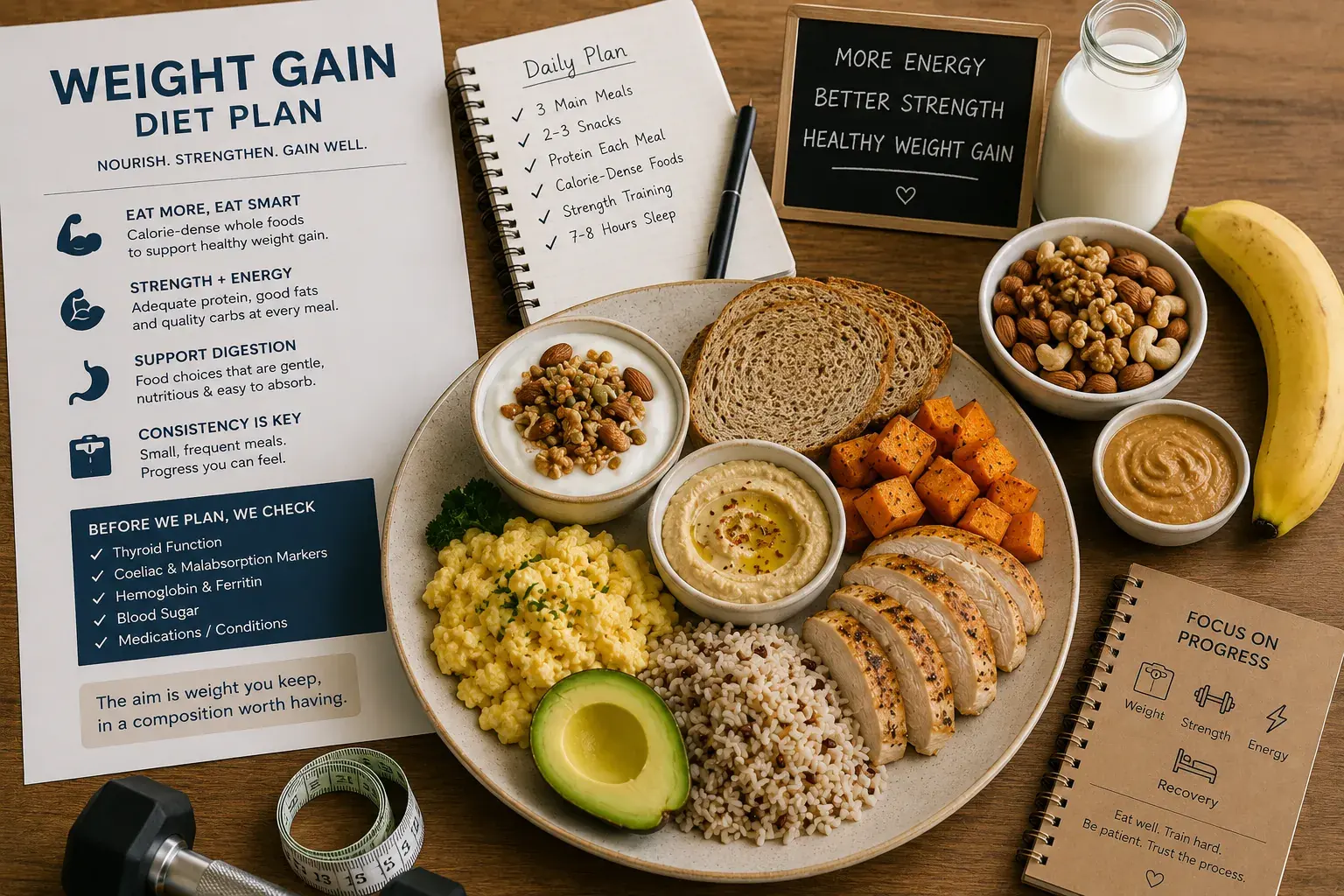
So the assessment comes first: thyroid function, coeliac and other malabsorption markers, haemoglobin and ferritin, blood sugar, and any medication or condition suppressing appetite. Where something in your reports needs a doctor, you are told and referred rather than fed through it.
The plan itself raises energy density without raising volume beyond what you can comfortably eat — more frequent meals, calorie-dense whole foods, adequate protein spread across the day, and structure around any appetite or digestive limits you have. The aim is weight you keep, in a composition worth having.
Who this is for
- Adults with a BMI below the healthy range
- Rebuilding weight after illness, surgery or a long hospital stay
- Weight loss from a chronic condition, alongside medical treatment
- Adolescents and young adults who struggle to gain
- Anyone wanting to add muscle rather than simply add weight
What’s included
- Assessment for the causes of low weight — thyroid, malabsorption, anaemia, appetite
- A calorie-dense plan built on whole foods rather than commercial shakes
- Protein spread across the day to support muscle rather than fat gain
- Meal frequency and timing structured around a limited appetite
- Guidance where digestion, nausea or medication is limiting intake
- Weight and measurements tracked at follow-up, with the plan stepped up gradually
—How it works
From the first form to a plan that keeps up with you
Six stages. The last two repeat for as long as you work together — that loop is the point.
Assess
Pick a time and fill in the new-patient assessment — your details, health history, medication and what you want to change. A few minutes now means the consultation starts with the real picture.
Understand
We go through your history, your routine and any blood work from the last six months together, and agree what to work on first. Nothing is planned around a number you have not seen.
Plan
A plan built from the food you already cook — every slot of every day, in household portions, with calories and macros calculated from the ingredients rather than estimated.
Live
Your plan arrives in the practice's app. Sign in with your phone number and the access code you're given, check meals off with a live photo, and log your weight and measurements.
Measure
Weight, measurements, adherence and any new blood reports gather in one record — the same record you and your nutritionist both see.
Adapt
At each follow-up the plan is revised against what the record actually shows. Earlier versions are kept, so progress is a history rather than a rewrite.
Included: the practice’s nutrition app
Your plan for this programme lives in the practice’s own app — today’s meals in household portions, a live-camera check-off so your nutritionist sees the real plate, your weight and measurement trends, and your blood markers charted against their normal ranges. It opens in the browser on any phone or laptop, and it is included in the programme fee.
See what the app doesQuestions about weight gain diet plans
Will I be put on protein powder or mass gainers?
Only if food alone genuinely cannot meet your needs, and then with a clear reason. Commercial gainers are largely sugar, and they are not the starting point here.
Why does an underweight person need blood tests?
Because low weight can have a medical cause — thyroid, coeliac disease, malabsorption, diabetes, anaemia. Eating more without checking simply delays finding it.
Can I gain muscle rather than fat?
Composition is planned for — protein is distributed across the day and resistance training is encouraged where you are able. Results vary with age, training and genetics, so no specific ratio is promised.
Questions about booking, fees, follow-ups or the app are answered in the practice FAQ.
Nutrition support complements your medical treatment — it does not replace your doctor's advice, diagnosis or prescribed medication. Nothing on this page is a diagnosis or a promise of a particular result.
—Client experience
What clients say
Client reviews are being collected with permission and will appear here. In the meantime, ask on WhatsApp and you'll be put in touch with a current client.
Other programmes
Weight Loss Programs
A structured plan using the food you already cook, portioned in household measures and paced for loss you can hold on to.
Explore this programmeSports Nutrition
Training-day fuelling, protein targets, hydration and recovery nutrition for athletes and regular gym-goers.
Explore this programmePCOS Nutrition Consultation
Insulin-aware eating patterns, meal timing and weight support planned around your PCOS diagnosis and your reports.
Explore this programme→Begin
Let’s build a plan that keeps up with you.
One assessment, one plan built around your life, and a record that keeps up with you. Book a consultation, or ask a question first — both are fine.
No obligation to continue after the first consultation. Fees are confirmed in writing before you book.