Condition-specific care
Thyroid diet plan for hypothyroidism & hyperthyroidism
Diet planning for hypo- and hyperthyroidism, built around your TSH/T3/T4 trend, medication timing and energy through the day.
- M.Sc. Food & NutritionPostgraduate qualified, 10+ years in practice
- Online across the UKBy video or phone, wherever you are
- Full health assessmentHistory, medication and blood results before plan one
- Planned against your resultsBlood markers charted and banded, review to review
- South Asian diets a specialityRotis, dals and rice in real portions — or whatever you cook
- Your own nutrition appIncluded with every programme, on phone or laptop
Thyroid disorders change how much energy you have, how easily weight shifts, and how your gut behaves — and the nutrition advice circulating online is largely a list of foods to fear. Most of it is not supported by evidence, and avoiding whole vegetable families on the strength of it costs you nutrition you needed.
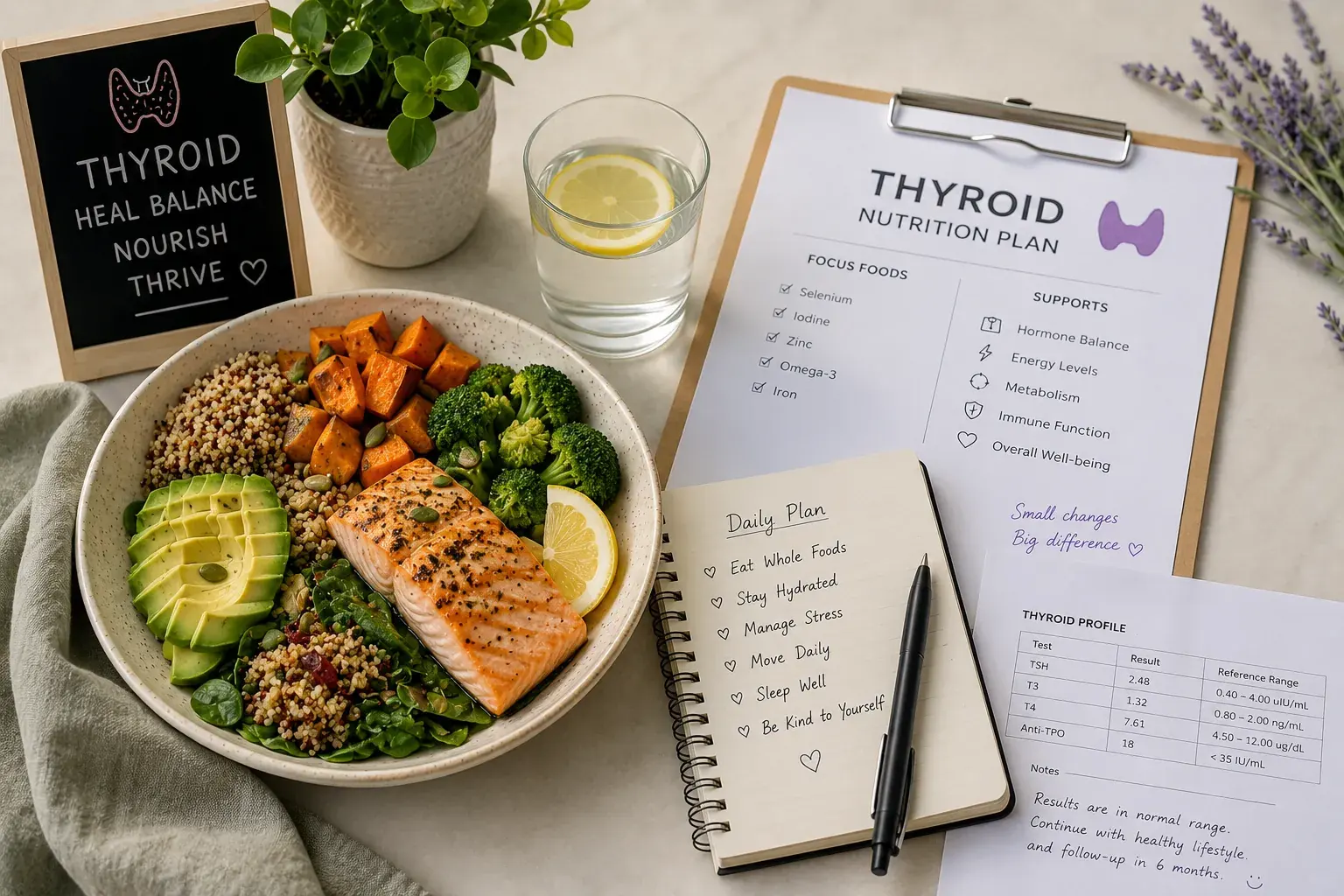
This consultation works from your reports and your prescription. We look at your TSH, T3 and T4 trend over time rather than one reading, at when you take your thyroxine and what you eat around it, and at the deficiencies that commonly sit underneath thyroid symptoms — iron, ferritin, vitamin D and B12 in particular.
The plan then covers meal timing around medication, adequate protein and micronutrients, fibre for the constipation that often comes with hypothyroidism, and a realistic weight approach that accounts for a slower metabolic rate instead of pretending it away.
Who this is for
- Hypothyroidism or Hashimoto's thyroiditis, newly diagnosed or long-standing
- Hyperthyroidism or Graves' disease under medical management
- Subclinical hypothyroidism being monitored by your doctor
- Thyroid disorder alongside PCOS, diabetes or high cholesterol
- Fatigue, hair fall or weight change with a known thyroid diagnosis
What’s included
- Review of your TSH / T3 / T4 history as a trend, not a single reading
- Meal and medication timing planned so absorption is not compromised
- Screening your reports for the iron, ferritin, vitamin D and B12 gaps that commonly co-exist
- A full meal plan in household measures, built around your usual cuisine
- A clear, evidence-based answer on soy, cruciferous vegetables and iodine — instead of blanket bans
- Follow-up reviews as repeat thyroid reports come in
—How it works
From the first form to a plan that keeps up with you
Six stages. The last two repeat for as long as you work together — that loop is the point.
Assess
Pick a time and fill in the new-patient assessment — your details, health history, medication and what you want to change. A few minutes now means the consultation starts with the real picture.
Understand
We go through your history, your routine and any blood work from the last six months together, and agree what to work on first. Nothing is planned around a number you have not seen.
Plan
A plan built from the food you already cook — every slot of every day, in household portions, with calories and macros calculated from the ingredients rather than estimated.
Live
Your plan arrives in the practice's app. Sign in with your phone number and the access code you're given, check meals off with a live photo, and log your weight and measurements.
Measure
Weight, measurements, adherence and any new blood reports gather in one record — the same record you and your nutritionist both see.
Adapt
At each follow-up the plan is revised against what the record actually shows. Earlier versions are kept, so progress is a history rather than a rewrite.
Included: the practice’s nutrition app
Your plan for this programme lives in the practice’s own app — today’s meals in household portions, a live-camera check-off so your nutritionist sees the real plate, your weight and measurement trends, and your blood markers charted against their normal ranges. It opens in the browser on any phone or laptop, and it is included in the programme fee.
See what the app doesQuestions about thyroid diet planning
Should I stop eating cabbage, cauliflower and soy?
In ordinary cooked quantities, no. The concern comes from studies at intakes far beyond normal eating. We would rather keep the nutrition those foods provide and manage the variables that genuinely matter, such as medication timing.
How long after my thyroid tablet can I eat?
This is planned individually around your prescription and your morning routine, and it is one of the practical changes that makes the most difference. Your prescribing doctor's instructions take precedence.
Can a diet plan reduce my thyroid medication dose?
No, and nothing here is designed to. Dose is a medical decision made by your doctor on the basis of your reports. Nutrition supports your energy, weight and nutrient status alongside that treatment.
Questions about booking, fees, follow-ups or the app are answered in the practice FAQ.
Nutrition support complements your medical treatment — it does not replace your doctor's advice, diagnosis or prescribed medication. Nothing on this page is a diagnosis or a promise of a particular result.
—Client experience
What clients say
Client reviews are being collected with permission and will appear here. In the meantime, ask on WhatsApp and you'll be put in touch with a current client.
Other programmes
PCOS Nutrition Consultation
Insulin-aware eating patterns, meal timing and weight support planned around your PCOS diagnosis and your reports.
Explore this programmeDiabetes Diet Consultation
Carbohydrate distribution and portion structure tracked against your HbA1c and fasting sugars, alongside your treating doctor.
Explore this programmeObesity Management
Long-term weight management with staged targets, regular measurements and review — paced to be sustainable, not punishing.
Explore this programme→Begin
Let’s build a plan that keeps up with you.
One assessment, one plan built around your life, and a record that keeps up with you. Book a consultation, or ask a question first — both are fine.
No obligation to continue after the first consultation. Fees are confirmed in writing before you book.