Condition-specific care
Arthritis diet & nutrition support
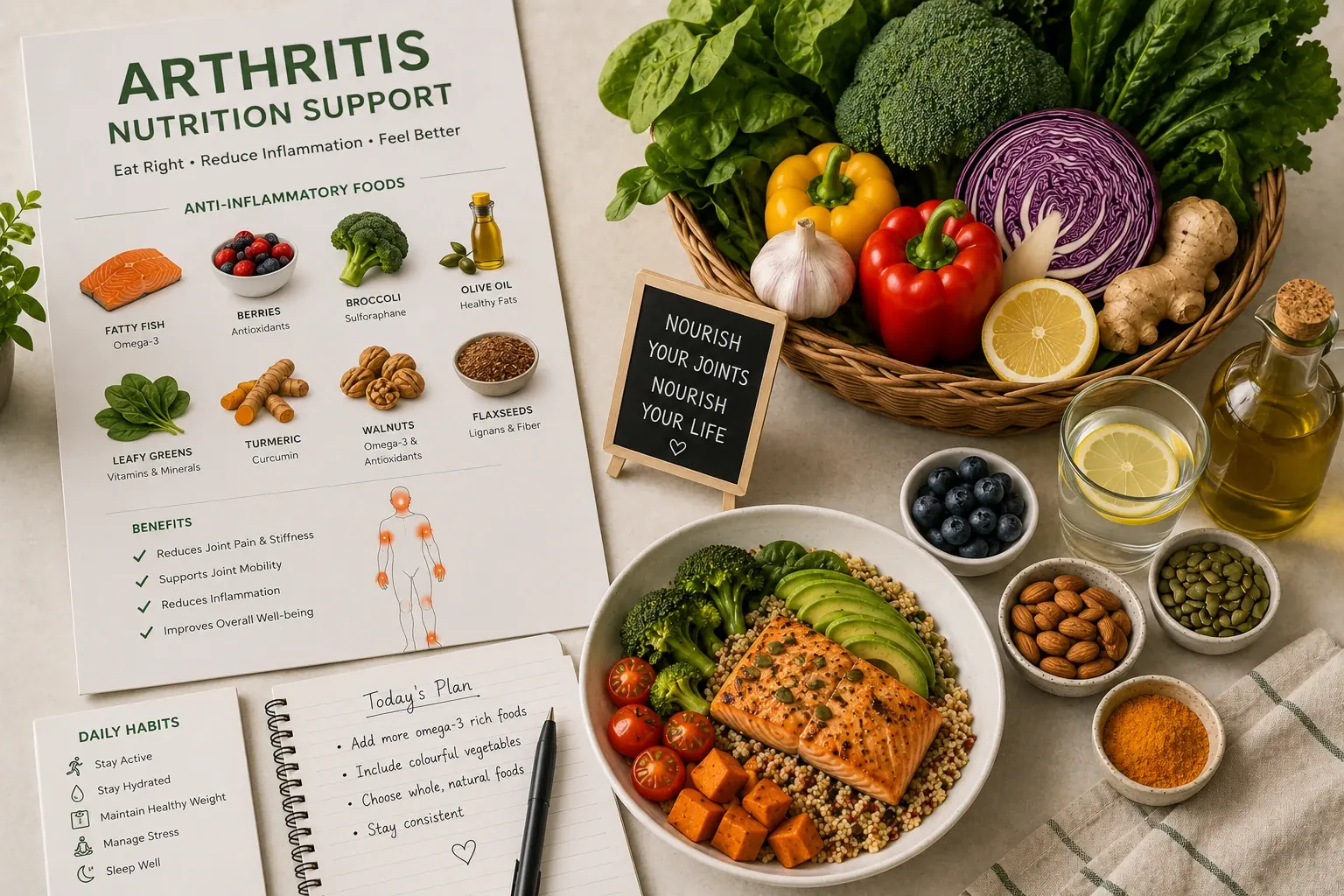
Anti-inflammatory eating patterns, joint-load reduction through weight management, and nutrient adequacy for bone and joint health.
- M.Sc. Food & NutritionPostgraduate qualified, 10+ years in practice
- Online across the UKBy video or phone, wherever you are
- Full health assessmentHistory, medication and blood results before plan one
- Planned against your resultsBlood markers charted and banded, review to review
- South Asian diets a specialityRotis, dals and rice in real portions — or whatever you cook
- Your own nutrition appIncluded with every programme, on phone or laptop
Nutrition does not treat arthritis, and any page telling you a diet will cure it is selling something. What nutrition can do is address the parts of the picture that food genuinely influences: body weight carried through the knees and hips, overall inflammatory load, bone density, and the deficiencies that make pain and fatigue worse.
The plan differs by diagnosis. Osteoarthritis is dominated by mechanical load, so weight is the single biggest lever. Rheumatoid arthritis is autoimmune, and the emphasis shifts to an anti-inflammatory pattern, gut health, and managing the nutritional cost of long-term steroids or methotrexate. Gout has specific, well-evidenced dietary levers around purines, fructose and hydration.
Vitamin D, calcium, B12 and iron are checked as a matter of course — they are commonly low in this group, they are correctable, and they affect how you feel day to day.
Who this is for
- Osteoarthritis of the knees, hips or spine
- Rheumatoid arthritis or another inflammatory arthritis under rheumatology care
- Gout or repeatedly raised uric acid
- Osteoporosis or osteopenia needing bone-supportive nutrition
- Joint pain alongside excess weight, where load reduction would help
What’s included
- Assessment of your diagnosis, medication and current pain and mobility
- An anti-inflammatory eating pattern built from everyday Indian foods
- Weight management where joint loading is a factor, paced for your mobility
- Calcium, vitamin D, B12 and protein adequacy reviewed against your reports
- For gout: purine, fructose and hydration guidance with uric acid tracked over time
- Attention to the nutritional side-effects of long-term steroids or DMARDs
—How it works
From the first form to a plan that keeps up with you
Six stages. The last two repeat for as long as you work together — that loop is the point.
Assess
Pick a time and fill in the new-patient assessment — your details, health history, medication and what you want to change. A few minutes now means the consultation starts with the real picture.
Understand
We go through your history, your routine and any blood work from the last six months together, and agree what to work on first. Nothing is planned around a number you have not seen.
Plan
A plan built from the food you already cook — every slot of every day, in household portions, with calories and macros calculated from the ingredients rather than estimated.
Live
Your plan arrives in the practice's app. Sign in with your phone number and the access code you're given, check meals off with a live photo, and log your weight and measurements.
Measure
Weight, measurements, adherence and any new blood reports gather in one record — the same record you and your nutritionist both see.
Adapt
At each follow-up the plan is revised against what the record actually shows. Earlier versions are kept, so progress is a history rather than a rewrite.
Included: the practice’s nutrition app
Your plan for this programme lives in the practice’s own app — today’s meals in household portions, a live-camera check-off so your nutritionist sees the real plate, your weight and measurement trends, and your blood markers charted against their normal ranges. It opens in the browser on any phone or laptop, and it is included in the programme fee.
See what the app doesQuestions about arthritis nutrition support
Can a diet cure my arthritis?
No. Arthritis is managed medically by your rheumatologist or orthopaedic specialist. Nutrition supports weight, inflammation, bone health and nutrient status alongside that treatment.
Should I stop eating tomatoes, potatoes and brinjal?
The nightshade theory is popular and poorly supported. Rather than removing nutritious foods on a rumour, we can trial a structured elimination and reintroduction if you genuinely suspect a trigger, and keep whatever the trial actually shows.
I have gout. Does that need a different plan?
Yes. Gout has specific, well-evidenced dietary levers — purine load, fructose, alcohol and hydration — and uric acid is tracked at each review alongside your medication.
Questions about booking, fees, follow-ups or the app are answered in the practice FAQ.
Nutrition support complements your medical treatment — it does not replace your doctor's advice, diagnosis or prescribed medication. Nothing on this page is a diagnosis or a promise of a particular result.
—Client experience
What clients say
Client reviews are being collected with permission and will appear here. In the meantime, ask on WhatsApp and you'll be put in touch with a current client.
Other programmes
PCOS Nutrition Consultation
Insulin-aware eating patterns, meal timing and weight support planned around your PCOS diagnosis and your reports.
Explore this programmeThyroid Diet Planning
Diet planning for hypo- and hyperthyroidism, built around your TSH/T3/T4 trend, medication timing and energy through the day.
Explore this programmeDiabetes Diet Consultation
Carbohydrate distribution and portion structure tracked against your HbA1c and fasting sugars, alongside your treating doctor.
Explore this programme→Begin
Let’s build a plan that keeps up with you.
One assessment, one plan built around your life, and a record that keeps up with you. Book a consultation, or ask a question first — both are fine.
No obligation to continue after the first consultation. Fees are confirmed in writing before you book.