Every life stage
Child & teenage nutrition consultation
Growth-appropriate meals, fussy-eating strategies and lunchbox planning for children and teenagers.
- M.Sc. Food & NutritionPostgraduate qualified, 10+ years in practice
- Online across the UKBy video or phone, wherever you are
- Full health assessmentHistory, medication and blood results before plan one
- Planned against your resultsBlood markers charted and banded, review to review
- South Asian diets a specialityRotis, dals and rice in real portions — or whatever you cook
- Your own nutrition appIncluded with every programme, on phone or laptop
Most parents arrive with one of three worries: my child eats nothing, my child eats only junk, or my child is gaining too much weight. All three are common, and all three get worse when mealtimes turn into a negotiation.
The consultation looks at growth against standard charts rather than at a single weight, at what is actually being eaten across a week, and at the structure around eating — timing, screens, snacking, sleep, and who decides what appears on the plate. Where growth or a report suggests something medical, you are referred to your paediatrician.
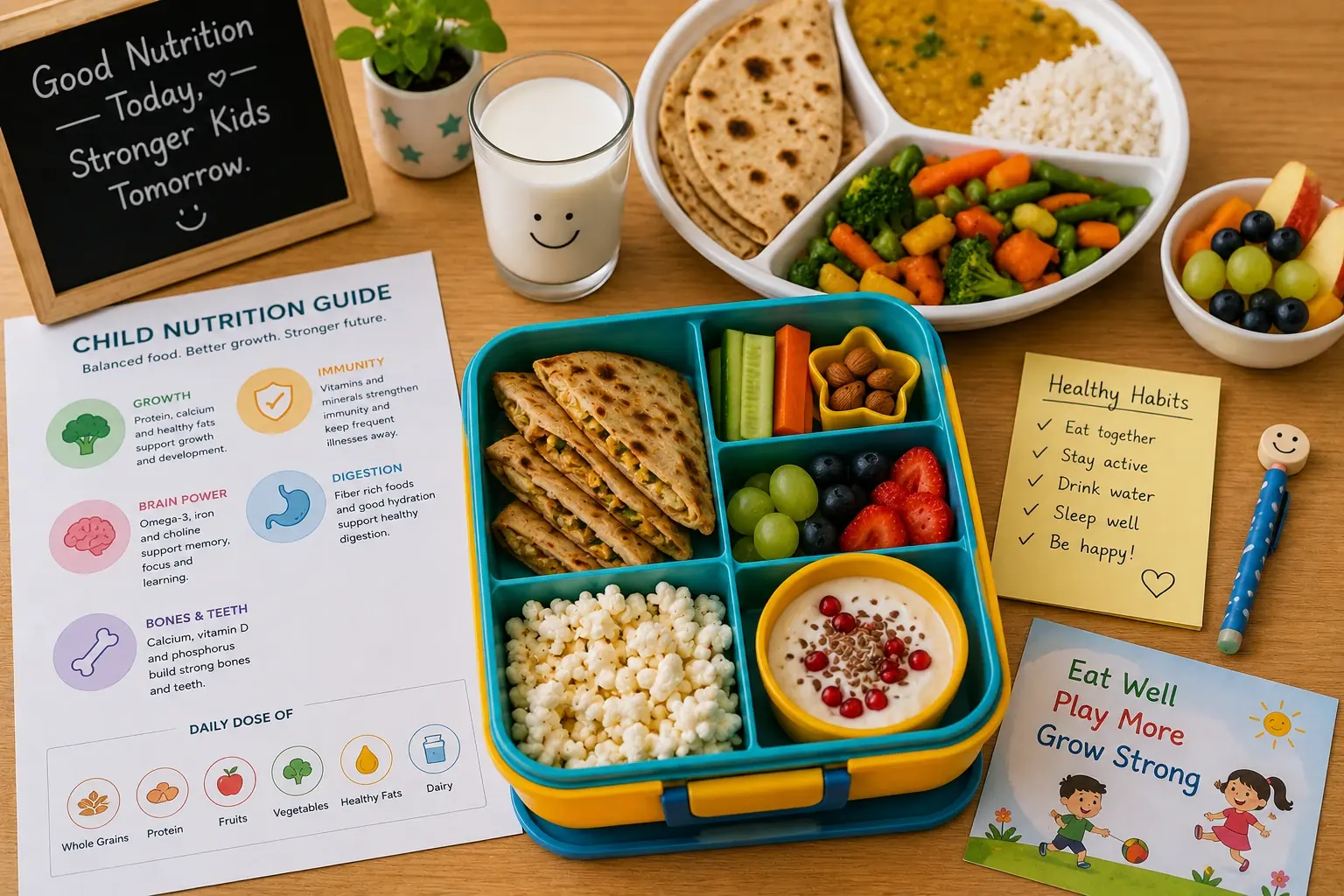
Plans are practical: lunchboxes that survive till lunchtime, familiar foods rebuilt to be more nutritious, and a realistic approach to fussy eating that does not rely on bribery or on removing everything a child likes. For teenagers there is the additional matter of sport, exam schedules, body image and iron status, particularly in girls.
Who this is for
- Fussy eaters, and children with a very narrow range of accepted foods
- Children below or above the expected growth range for their age
- Childhood obesity, approached without dieting language
- Teenagers in sport, or under exam-period pressure
- Children with anaemia, low vitamin D, or a food allergy under medical care
What’s included
- Growth assessed against standard charts, not a single weight
- A week's worth of realistic meals, snacks and lunchbox options
- Practical fussy-eating strategies that avoid bribery and mealtime conflict
- Iron, calcium, vitamin D and B12 adequacy for growth
- Age-appropriate guidance for teenagers on sport, energy and body image
- Guidance for parents on structure, timing and screens around meals
—How it works
From the first form to a plan that keeps up with you
Six stages. The last two repeat for as long as you work together — that loop is the point.
Assess
Pick a time and fill in the new-patient assessment — your details, health history, medication and what you want to change. A few minutes now means the consultation starts with the real picture.
Understand
We go through your history, your routine and any blood work from the last six months together, and agree what to work on first. Nothing is planned around a number you have not seen.
Plan
A plan built from the food you already cook — every slot of every day, in household portions, with calories and macros calculated from the ingredients rather than estimated.
Live
Your plan arrives in the practice's app. Sign in with your phone number and the access code you're given, check meals off with a live photo, and log your weight and measurements.
Measure
Weight, measurements, adherence and any new blood reports gather in one record — the same record you and your nutritionist both see.
Adapt
At each follow-up the plan is revised against what the record actually shows. Earlier versions are kept, so progress is a history rather than a rewrite.
Included: the practice’s nutrition app
Your plan for this programme lives in the practice’s own app — today’s meals in household portions, a live-camera check-off so your nutritionist sees the real plate, your weight and measurement trends, and your blood markers charted against their normal ranges. It opens in the browser on any phone or laptop, and it is included in the programme fee.
See what the app doesQuestions about child nutrition
My child refuses vegetables entirely. Is that fixable?
Usually, but through repeated low-pressure exposure and small changes to how food is offered rather than through force. It takes weeks rather than days, and the plan is written for parents to actually run.
Should an overweight child be put on a diet?
Generally no. Children are still growing, so the usual approach is to hold weight steady while height increases, and to change the household's food environment rather than single the child out.
Are supplements needed for children?
Only where a report or a clearly inadequate diet indicates one, and in coordination with your paediatrician. Food comes first.
Questions about booking, fees, follow-ups or the app are answered in the practice FAQ.
Nutrition support complements your medical treatment — it does not replace your doctor's advice, diagnosis or prescribed medication. Nothing on this page is a diagnosis or a promise of a particular result.
—Client experience
What clients say
Client reviews are being collected with permission and will appear here. In the meantime, ask on WhatsApp and you'll be put in touch with a current client.
Other programmes
Pregnancy Nutrition
Trimester-wise nutrition, iron / calcium / folate adequacy, and continued support through post-natal recovery and lactation.
Explore this programmePCOS Nutrition Consultation
Insulin-aware eating patterns, meal timing and weight support planned around your PCOS diagnosis and your reports.
Explore this programmeThyroid Diet Planning
Diet planning for hypo- and hyperthyroidism, built around your TSH/T3/T4 trend, medication timing and energy through the day.
Explore this programme→Begin
Let’s build a plan that keeps up with you.
One assessment, one plan built around your life, and a record that keeps up with you. Book a consultation, or ask a question first — both are fine.
No obligation to continue after the first consultation. Fees are confirmed in writing before you book.